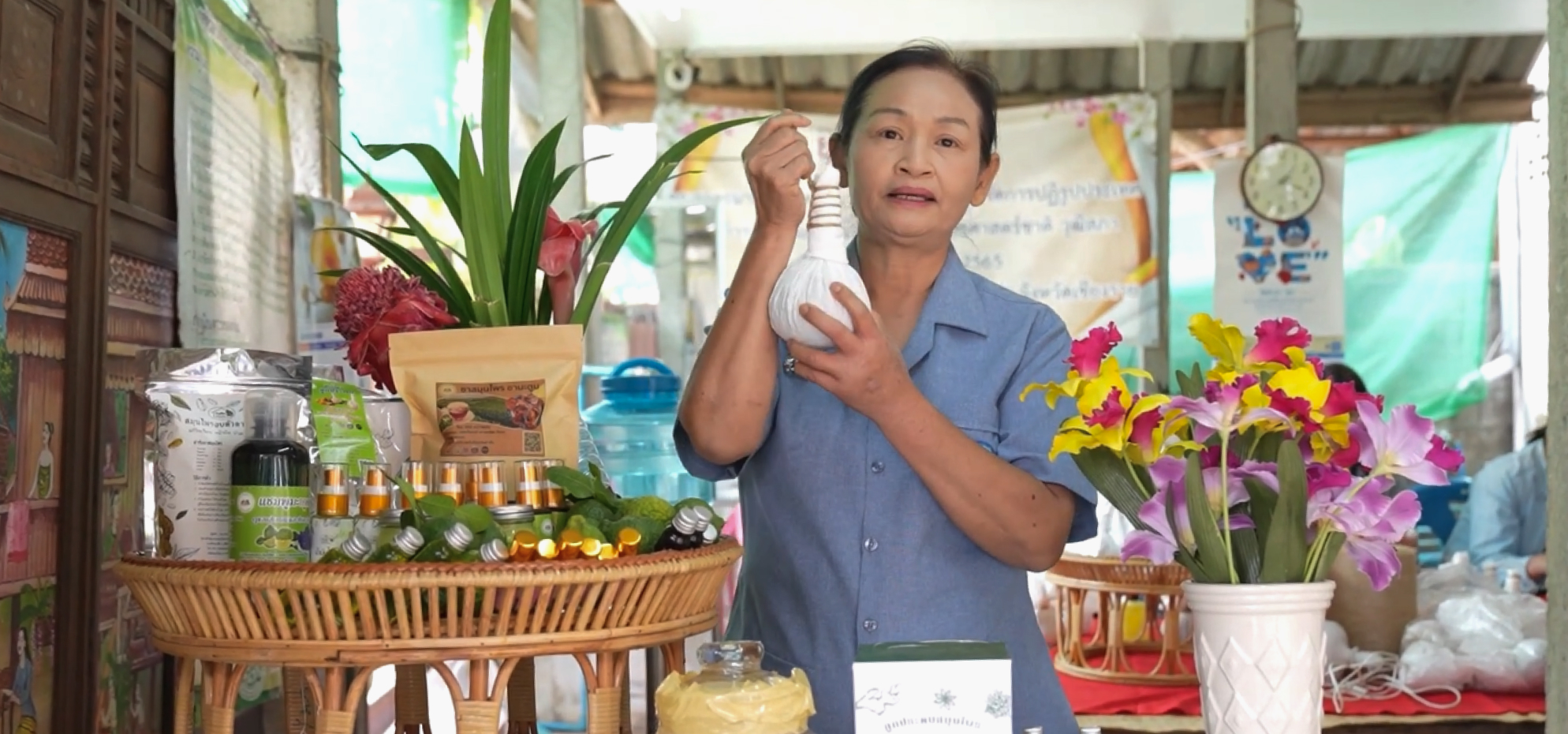
A Community Enterprise Leader’s Devotion to Local Development and the Enhancement of Thai Herbal Products
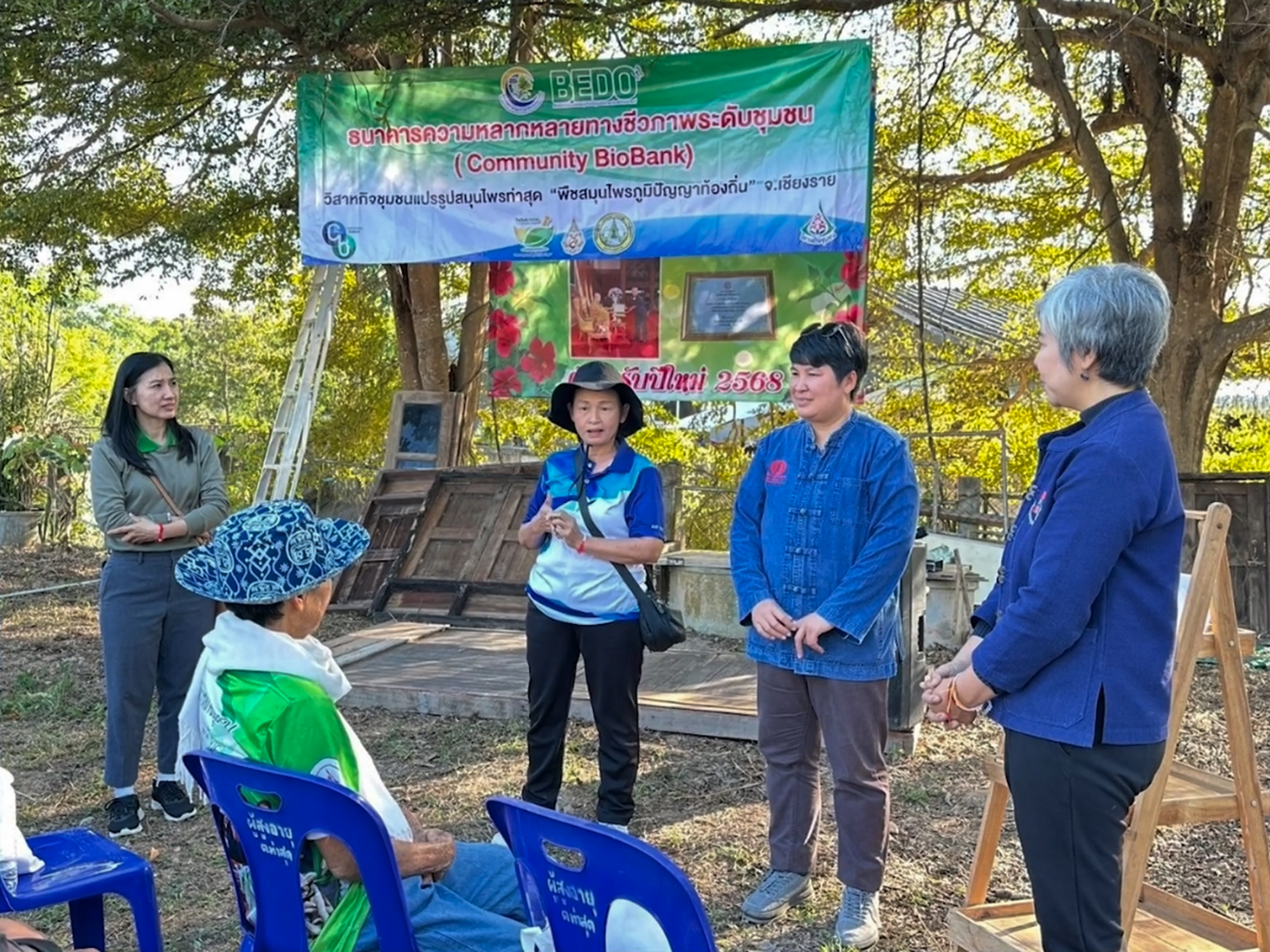
Every year when I came home (from Moscow), I saw so many herbs everywhere. That’s when I started thinking, ‘why don’t we form an herbal group? I’d see herbs all over the house, and in every village, they were just left unused. Having worked in the spa industry, I knew these very same herbs from our homes were being used in spas abroad and here in Thailand too.
Thanawan Boonkrapphuang
President of the Ban Khia Herbal Community Enterprise, Chiang Khong District, Chiang Rai Province
What Happens Now?
At 56, Thanawan stands as proof that change begins with courage. Once a village woman balancing household duties and caregiving, she has become a community leader who transforms local wisdom into opportunity.
” I thought there’s so much potential to generate income for the community. And realized I could help lead that change, creating livelihoods for people here. “
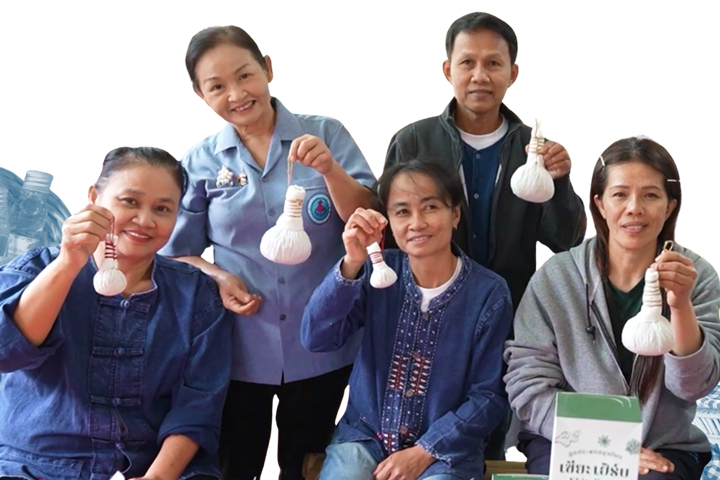
Every day, she weaves together her many roles — herbal producer, mentor, market trailblazer, and village health volunteer — driven by the belief that women’s strength can sustain entire communities.
However, obtaining official product certifications in Thailand remains a significant challenge for small-scale herbal entrepreneurs.
To bring herbal products to market legally and safely,
producers must meet strict regulatory requirements, including approval from the Thai Food and Drug Administration (FDA) and compliance with community product standards such as OTOP and Community Product Standard certifications.
Challenges We Face
“ When we apply for official product standards, the process becomes very complicated because we are just local villagers … ”
“ … If we had FDA certification, we could even export our products abroad, and that would increase our group’s income significantly. ”
1 / 2
While these standards help ensure product quality and consumer trust, the process can be complex, time-consuming, and costly. Many community-based producers struggle to access the financial capital, technical knowledge, and administrative support required to meet regulatory criteria, test product safety, and maintain documentation.
“ We really hope that government agencies and partners can extend support and guidance to us — to be ”
To qualify, there are many strict requirements ...
“ … we need a proper production facility and specific infrastructure, like nine separate rooms. We already have the dream and the motivation, but the process is complex and challenging. For a community group like ours, it is not easy. ”
As a result, promising local herbal products often remain limited to informal markets despite strong cultural value and commercial potential. Supporting these entrepreneurs with capacity-building, financial assistance, and simplified regulatory pathways could enable
more inclusive growth in Thailand’s rising herbal economy.
What They Already Have
Knowledge and Expertise
Thanawan’s experience from working in the spa industry abroad gives her valuable skills in herbal product development and quality standards.
Community Collaboration
She mobilizes local women into a cooperative enterprise, turning shared effort into collective strength.
Local Wisdom
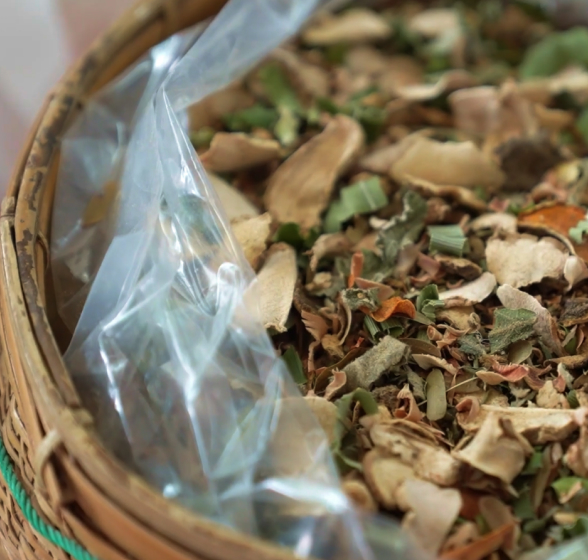
The enterprise draws on deep traditional knowledge of Thai herbs and natural healing.
Local Natural Resources
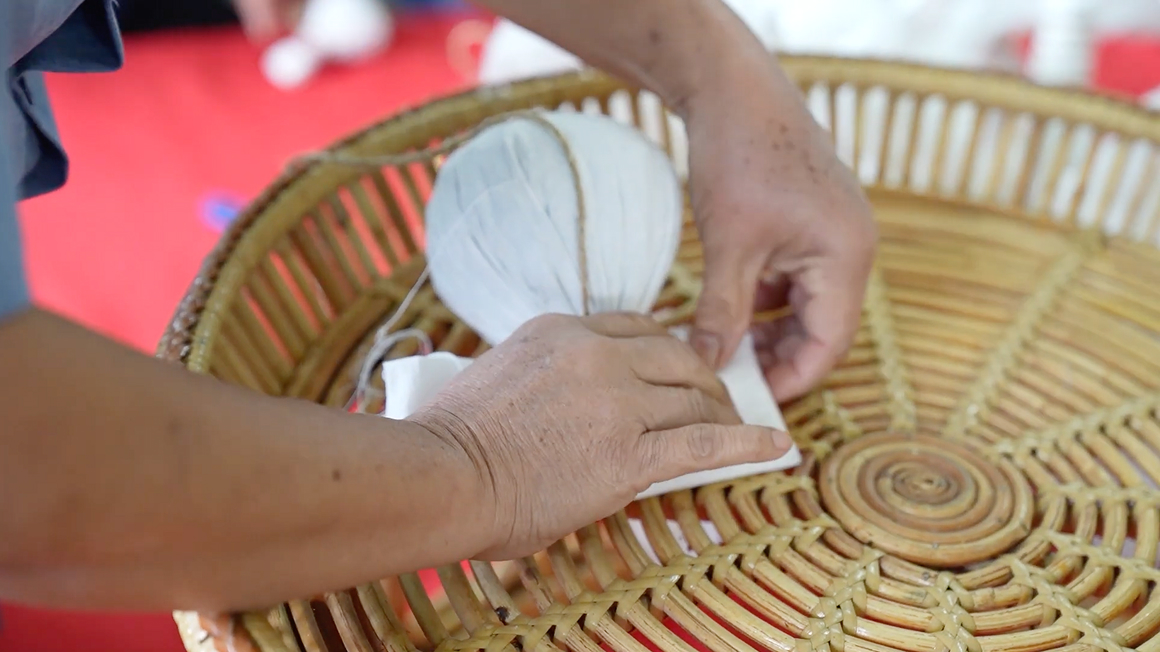
In Chiang Rai communities, a wide range of herbal plants—such as kaffir lime and lemongrass—are commonly found and easily accessible. Together with strong agricultural knowledge and available land for cultivation, these local resources can be developed and processed into diverse value-added products, creating significant opportunities to increase income through community-based production.
What They Need
Business and Marketing Support
To make their herbal products more competitive in wider markets.
Market Linkages
Connections to retail networks, fair trade markets, spas, or wellness tourism sectors could increase sales volume and income stability.
Access to Microfinance or Community Enterprise Grants
Essential for Scaling Production and Ensuring Consistent Supply.
Youth Engagement
Encouraging younger generations to join ensures continuity and innovation.
Which issue or policy do you think should be addressed as a priority?
Regulatory Complexity
Small-scale herbal producers must comply with strict regulations from the FDA and community product standards such as OTOP or Community Product Standard (CPS). Meeting these requirements often requires significant infrastructure (e.g., separate production rooms), product testing, and documentation, which is challenging for local village groups.
Your vote is counted.
25%
voted this one
Limited Access to Capital and Technical Knowledge
Community enterprises often lack financial resources to build compliant production facilities, purchase equipment, or cover testing and certification costs. There is a knowledge gap in areas such as food safety, quality control, packaging, and marketing, making compliance and scaling difficult.
Your vote is counted.
50%
voted this one
Sustainability and Growth Challenges
Small groups struggle to maintain consistent production, quality, and marketing efforts due to limited human and financial resources.
Your vote is counted.
25%
voted this one
Rural and Community Development Policies
Government programs exist to support micro and community enterprises (e.g., funding, training), but access is often limited for small, informal producers.
Cookies help us give you a better experience on this site. They let us remember your settings and learn which pages are useful. You choose what to allow, and you can change your mind at any time.
Functional
Always active
The technical storage or access is strictly necessary for the legitimate purpose of enabling the use of a specific service explicitly requested by the subscriber or user, or for the sole purpose of carrying out the transmission of a communication over an electronic communications network.
Preferences
The technical storage or access is necessary for the legitimate purpose of storing preferences that are not requested by the subscriber or user.
Statistics
The technical storage or access that is used exclusively for statistical purposes.The technical storage or access that is used exclusively for anonymous statistical purposes. Without a subpoena, voluntary compliance on the part of your Internet Service Provider, or additional records from a third party, information stored or retrieved for this purpose alone cannot usually be used to identify you.
Marketing
The technical storage or access is required to create user profiles to send advertising, or to track the user on a website or across several websites for similar marketing purposes.